After his seventh trade mission to Southeast Asia, Dr. Rodolfo Caffaro Kramer, Global President of MACC (Mercosur ASEAN Chamber of Commerce), talked to ReporteAsia to share his impressions on this latest trip to a key region in the current and future economy and geopolitics.
Regarding Caffaro Kramer, it is worth giving a brief presentation about his extensive background. He is a renowned lawyer (UBA) with a vast trajectory in different legal areas, he is a member of ECIJA law Firm in charge of the ASEAN Desk. He holds a PhD in Aeronautics and Space Law from the National Institute of Aeronautics and Space Law in Buenos Aires (INDAE) and a postgraduate degree in Arbitration and International Law from the University of Köln, Germany.
From the Global MACC presidency, Caffaro Kramer coordinates a work team that develops different platforms for MERCOSUR-ASEAN dialogue, promoting meetings, business rounds, seminars, and activities aimed at bringing these two areas of the world closer together, which are increasingly closer. It should be noted that MACC has offices in all MERCOSUR countries, with their respective presidents, and even has representatives in Southeast Asia, achieving a presence in different lines of work between Southeast Asia and MERCOSUR.
Background data showing the strength of this union
The Mercosur bloc, comprising Brazil, Argentina, Paraguay, and Uruguay, is the world’s fifth-largest economy. It represents a market of 295 million inhabitants and has a GDP of almost US$3 trillion per year.
Meanwhile, ASEAN is the world’s fourth-largest economy with a GDP of $4.1 trillion, behind only the United States, China and Germany. He noted that by 2023, ASEAN would account for 7% of world trade, 5% of global manufacturing value-added, and attract 17% of global foreign direct investment (FDI).
According to Caffaro Kramer, in the first minutes of the talk, «between these two parts of the world, «the relationship is growing, and from the business, institutional, governmental, and academic exchange, to name a few. MACC has made its contribution to this growing mutual knowledge. It has done so through its trade missions, which led us to visit several ASEAN countries with companies and businesspeople from MERCOSUR and through initiatives such as the ASEAN-Mercosur University Chair».
Regarding the bilateral relationship, he emphasizes that the link between Latin America and Asia Pacific, in terms of large regions, is increasingly fruitful. In a brief history of this relationship, he explains that «the signing of the Free Trade Agreement (FTA) between Chile and South Korea in 2003, the first of its kind between an Asian country and a Latin American one, marked a significant turning point in this integration.
Since then, the Asia-Pacific region has become a key partner for Latin America: «One concrete figure will help us illustrate this more clearly: in 2000, Asian nations accounted for 9% of the region’s total trade, while in 2018, this figure reached 26%.»
«The increase has been mostly due to the rise of China, which has become the main trading partner of several South American countries, such as Brazil and Peru, driving other countries in the region to consolidate their own relationship with LATAM,» he adds.
- Rodolfo, what impressions did you bring back from your last MACC mission to ASEAN?
I reconfirm with complete conviction that these two regions have enormous potential in terms of trade links.
Every year that I travel, I see changes in growth and development, which are reflected in a better quality of life for the people in each of the countries we visit.
I also see greater interest on the part of the ASEAN countries and our MERCOSUR businesspeople in getting to know and interacting commercially in the respective regions because MERCOSUR and Latin America, in general, are new, little-explored regions for ASEAN and same for our countries regarding ASEAN.
- How do the MERCOSUR countries position themselves in ASEAN, each with a different strategy?
MERCOSUR member countries have a different view of ASEAN, which reflects into other strategies.
We have for example Brazil, which is currently the country with the greatest insertion and interaction in ASEAN and the one that has best understood the importance and potential of ASEAN in terms of trade.
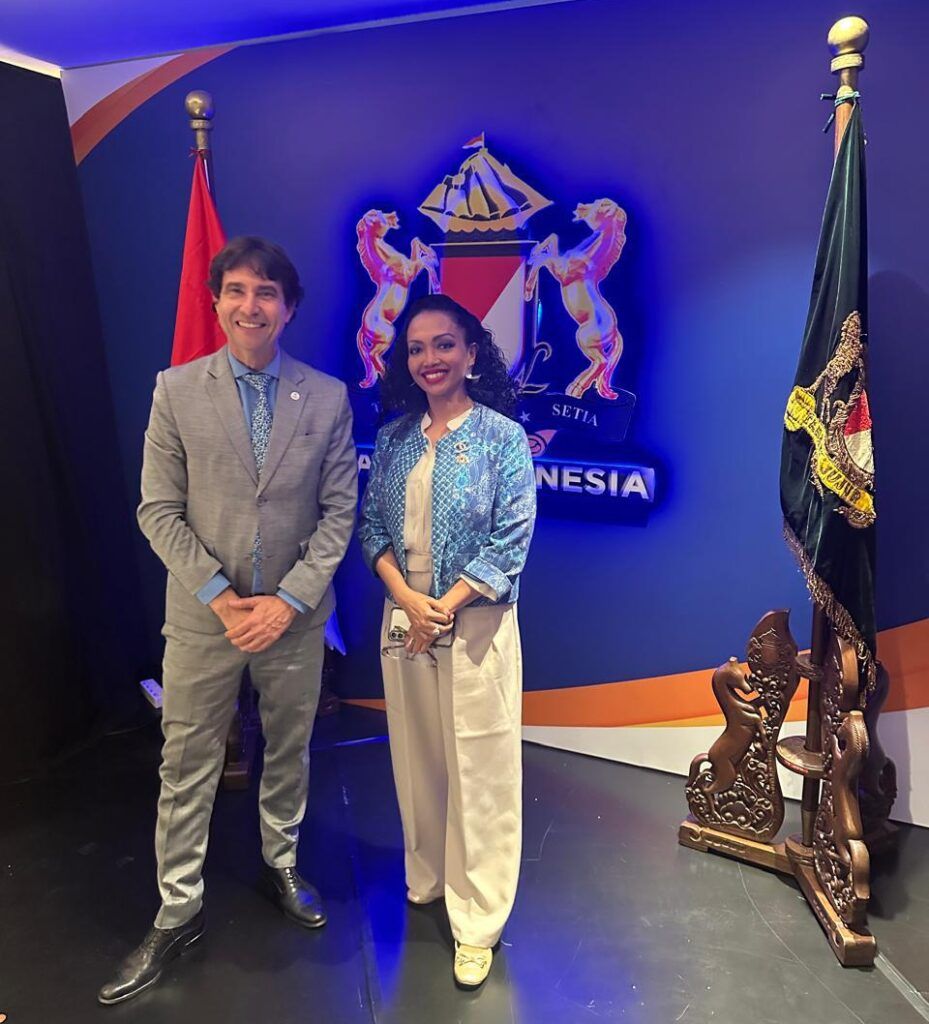
In fact, just over a year ago, Itamaraty created an area within the Brazilian Foreign Ministry dedicated exclusively to the relationship with ASEAN. Brazil is also the only MERCOSUR member country with two Ambassadors in Jakarta, Indonesia (the headquarters of the ASEAN Secretariat): one for the Brazil-Indonesia relationship and another for the Brazil-ASEAN relationship.
On the other hand, we have Paraguay without any Embassy in ASEAN, and that is why, from MACC and at every opportunity we have, we recommend to the Foreign Ministry and the Government of Paraguay to open at least one Embassy in ASEAN in order not to be absent in one of the fastest growing regions in the world.
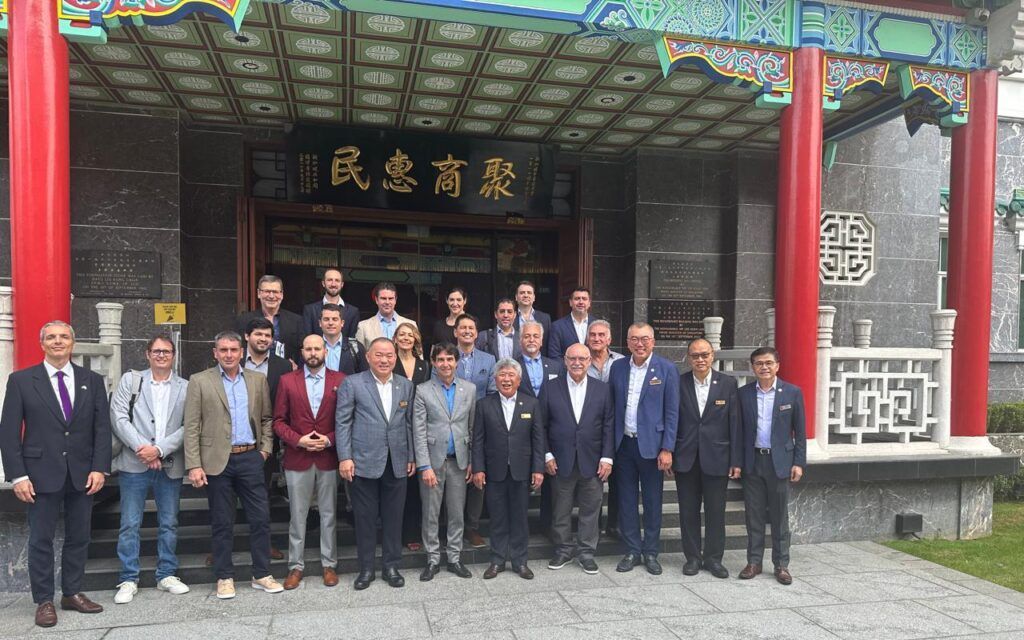
On this last trip, two REDIEX officials accompanied the Trade Mission. We organized several meetings for them in Singapore, Indonesia, and Vietnam, where good contacts were made at the official level.
One of the REDIEX officials who traveled was Javier Viveros, the recently appointed Vice Minister of REDIEX. He has already stated that his priority for AGENDA 2025 will be ASEAN.
This undoubtedly puts Paraguay «in the race” for ASEAN and it is a great satisfaction for us because we are seeing the results of our work with this beloved MERCOSUR country.
Uruguay’s case differs from Paraguay’s because Uruguay already has embassies in Vietnam, Malaysia, and Indonesia. While Uruguay strongly focuses on China, it increasingly looks to ASEAN as a trade destination.
It is also important to highlight that in Uruguay, we have a remarkable academic activity dedicated to promoting the relationship between MERCOSUR and ASEAN and conducting research. The person in charge is Professor Ignacio Bartesaghi, who is a reference on these international issues and is also responsible for implementing the MERCOSUR ASEAN University Chair. The Chair’s objective is to provide information and training for both the private and public sectors. We currently have 5 operational MERCOSUR ASEAN University Chairs (Uruguay, Argentina, Indonesia, Malaysia, and Vietnam); the last one was launched in Hanoi in October 2024.
Lastly, Argentina is the country with the greatest number of embassies in ASEAN after Brazil.
Argentina was also a pioneer in the establishment of diplomatic relations with ASEAN members; for example, with the Philippines, we are about to celebrate 77 years of diplomatic ties; Argentina was also the first Latin American country to establish diplomatic relations with Thailand, already 70 years; Indonesia has 69 years of diplomatic relationship, Malaysia 62 years and finally Vietnam 52 years.
Those examples together with ministerial and presidential visits undoubtedly mark Argentina’s interest in the region.
Argentina also has important academic activities promoting relations with ASEAN, such as the UADE, where the MERCOSUR ASEAN Chair and other Southeast Asian institutes operate.
I want to highlight the work in Argentina of Professor Ezequiel Ramoneda, who has always been dedicated to promoting this region at the Universities of La Plata, del Salvador, 3 de Febrero, and ALADAA, among others.
And, of course, media such as yours provide permanent and updated information on ASEAN and MERCOSUR.
All this leads me to highlight that Argentina has its eyes set on ASEAN and from MACC, we will continue deepening the country’s participation in this region.
To conclude this point, I would say that we (Argentina, Paraguay and Uruguay) should closely follow the actions being developed by «our big brother», Brazil, in ASEAN.
Brazil is evidently pursuing a clear commercial strategy with ASEAN, has worked for it in the public and private sectors, and has managed to enter this market with positive results.
Brazil is clearly and strongly signaling where to go and showing concrete results.
It’s just a matter of following it.
- Which business sectors stood out the most on this trip?
The most prominent were food and beverages, agricultural and agribusiness, veterinary medicines (vaccines), logistics services, legal and accounting services related to help companies landing in the regions, cosmetics and personal care; furniture; wood industry and technology.
- During your recent mission, you visited the Port of Singapore. What can you tell us about this experience?
The port of Singapore was an extraordinary experience. We visited the second-most important port in the world, which has an impressive technological deployment.
All loading and unloading movements are computerized and robotized; the cranes operate with technology that makes this port one of the world’s fastest and most efficient terminals.
High temperatures and climatic changes thus do not impede operations and do not subject port operators to unnecessary risks.
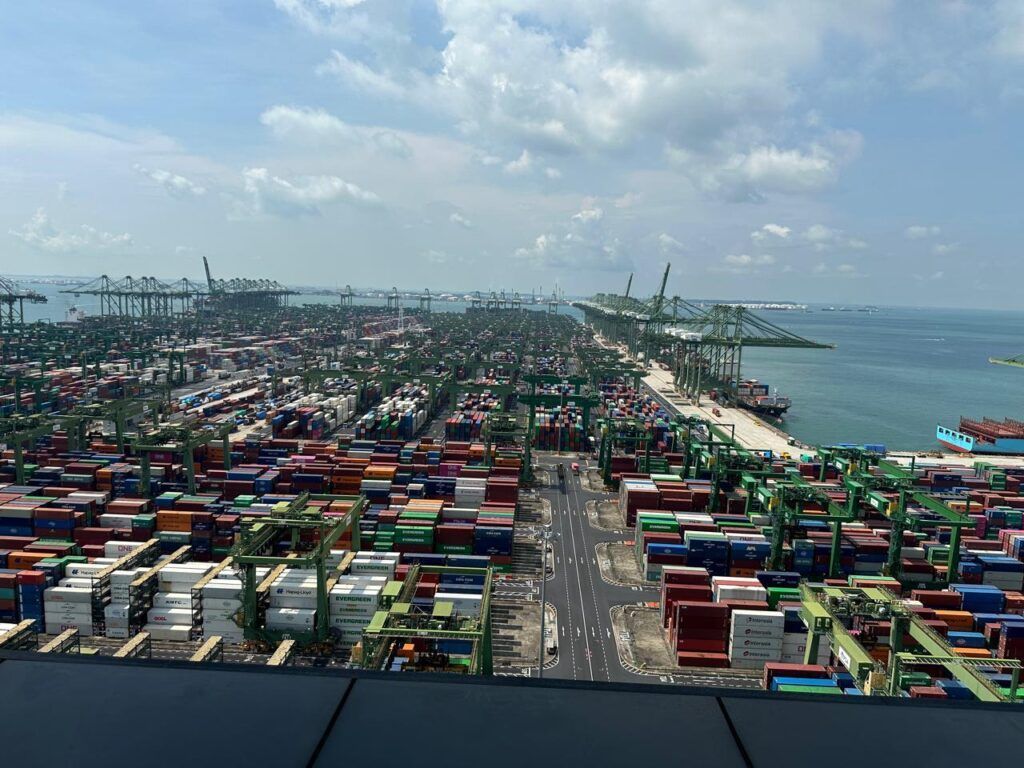
The port operates 24 hours a day, 7 days a week.
It is an exciting model; Singaporeans are permanently working to be at the forefront of logistics.
When you arrive at Singapore’s international airport, Changui, you disembark at the best airport in the world for services and logistics. This airport has been ranked number one in the top ten for years.
Singapore is a role model in many ways.
- Can MERCOSUR companies find a market with advantages for their products in ASEAN?
Definitely.
The food area, for example, is of paramount importance to ASEAN.
We have to keep in mind that these countries have clear policies regarding food security, including food availability and quality.
In 2015, the FAO stated that «more food will have to be produced in the next 40 years than in the last 10,000 years.»
Undoubtedly, MERCOSUR has an excellent opportunity to offer its quality products.
We must also consider to incorporate more technology into food production because the result will be a higher production in volumes.
Veterinary drugs, such as veterinary vaccines, also have good opportunities in ASEAN.
In the mining sector for example we have lithium, and copper, both have high demand in the region.
Producing certified timber is also exciting in the region, especially for furniture producers.
Animal feed is in high demand in ASEAN, as well as pre-mixed crops.
Agricultural machinery and primary products are required.
- Do you see an increase in cross-investment between the two regions as viable?
The investment decision must first exhaust a series of certainties and confirmations, which include the public sector with an analysis of incentives, regulations, international agreements and guarantees to foreign investment, and tax costs, among others.
You have to consider which country you want to invest in. It is not the same to do it in Brazil, or Paraguay, in our region or in Singapore or Indonesia in the ASEAN region.
That said, I see a viable «crossover» investment in both regions with excellent prospects for success.
I always said that the two regions are complementary. This is not just another phrase; it is the key to success in a business relationship, because we complement each other to achieve a final result together.
The key here is «knowledge.» We need to get to know each other better to understand our behaviors, the different commercial and cultural habits and needs, because that is from where we will build the projects.
In ASEAN, we will also find first-clas technology partners.
We have an extraordinary know-how in both: ASEAN and MERCOSUR regions and of course we can work with cross-know-how.
I like the «joint venture» model, because we will have partners in each region, which means they share the same interest in one or several projects.
This type of partnership builds solid and long-term relationships and opens doors to new projects.
The conditions are mature for investment. We always say to the MERCOSUR businesspeople: If a company wants to be important, it is necessary to grow abroad as that strengthens the company. “If you grow outside you will grow inside” We have many examples to prove this.
- You signed several agreements with leading ASEAN entities in this trip. What can you tell us about them?
MACC has signed agreements with all the major ASEAN Chambers of Commerce.
On this trip, we renewed the agreement with the Indonesian Chamber of Industry and Commerce, KADIN.
Kadin is a vast institution with 34 Regional Chambers in 514 districts to ensure national representation. To understand its importance, we must remember that Indonesia currently has a population of over 275 million.
We have also worked on this trip with the Singapore-India Chamber, China-Singapore Chamber, LatanCham, and VCCI Vietnam.
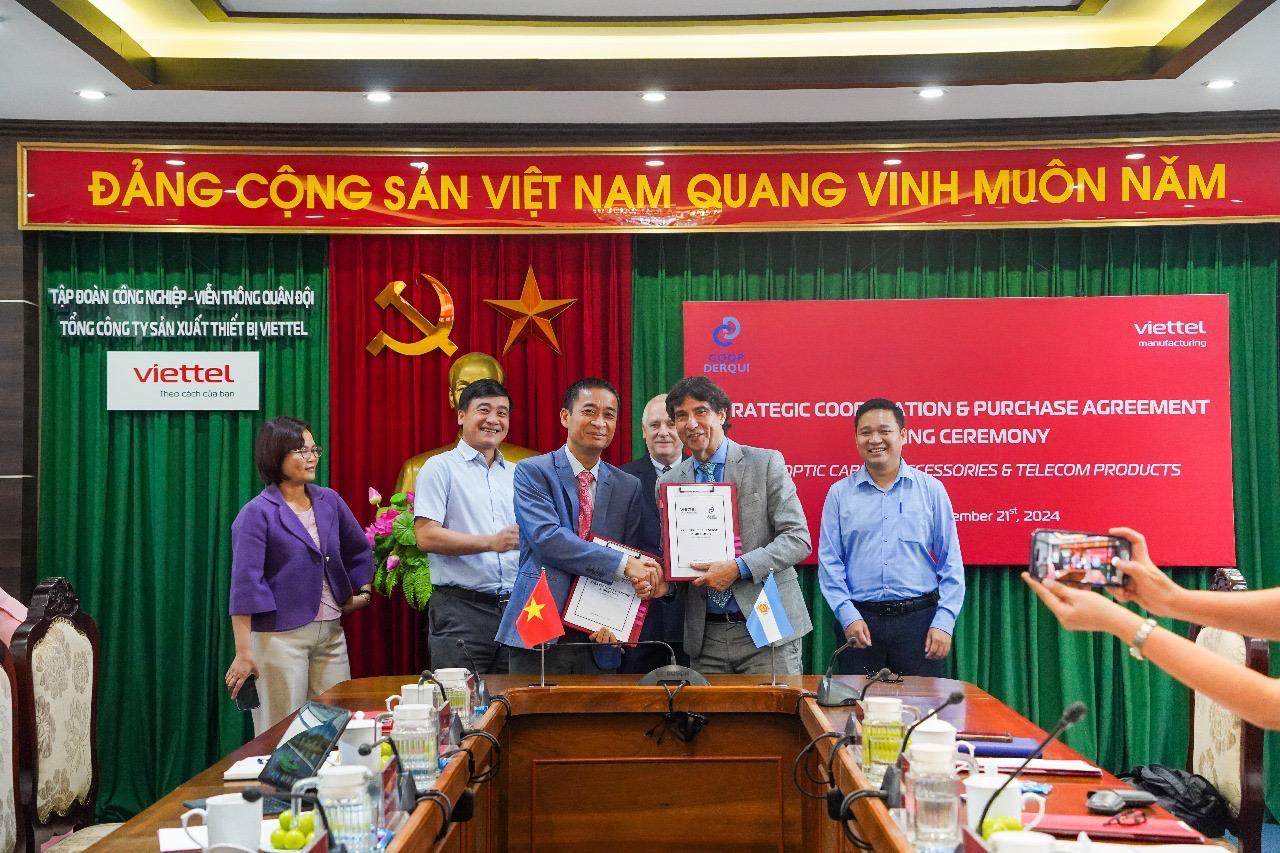
On the other hand, we signed agreements with companies such as Viettel in Vietnam and with Aerodyne in Malaysia. We are also working with the Cambodian government.
- Are you already organizing a new mission to ASEAN for 2025?
We will likely organize a trade mission this year. We already have invitations to participate in events in Malaysia and Indonesia during 2025.
We are also analyzing the calendar of trade fairs 2025 in the region to see if we can match the dates with a future mission.
Returning to the ASEAN region is essential for ensuring continuity and presence in the issues we are addressing. It is also essential to have a follow-up discipline after the missions, otherwise the relationships one makes on missions will eventually be lost.

Co-fundador de ReporteAsia.