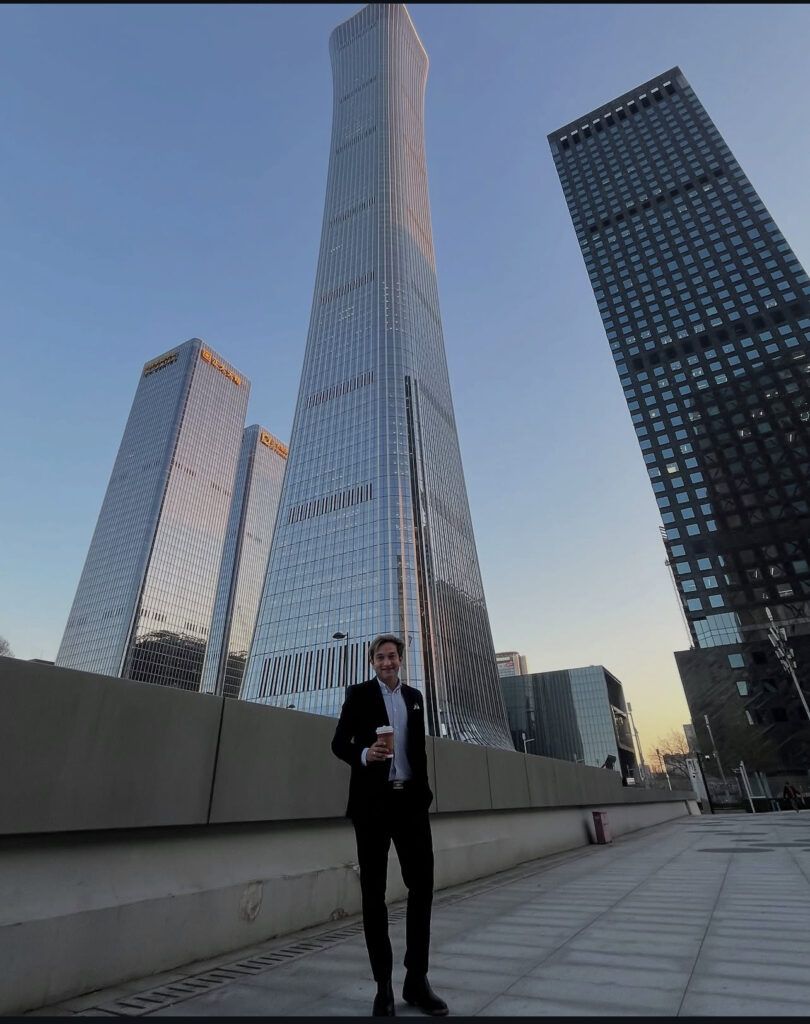
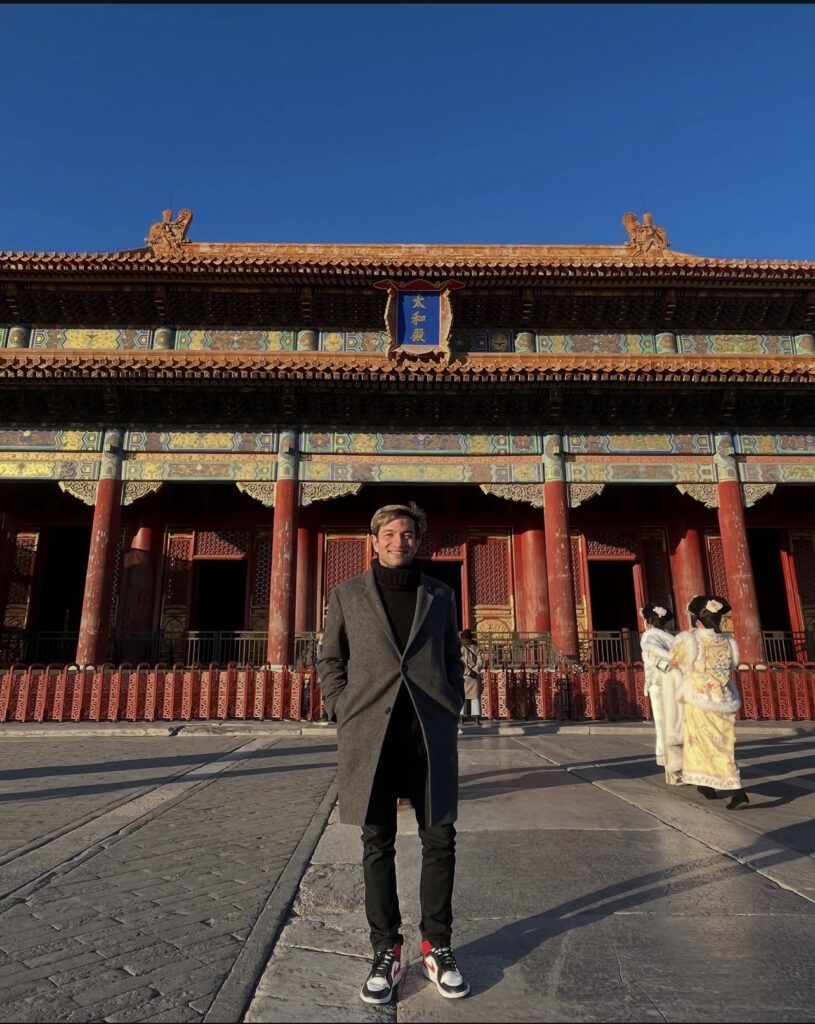
The stamp in my passport says that I traveled to China, but as I walk its streets and contemplate its urban landscapes, I can’t help feeling that I have traveled to the future. Beijing is a palpable reflection of how tradition and modernity coexist in a constant way.
Walking along its avenues, one finds oneself surrounded by ultra-modern skyscrapers that defy the clouds, while turning a corner, one discovers millenary temples and traditional markets that ooze the history of a millenary civilization.
This fascinating, almost surreal contrast turns the city into a stage where past and future intertwine in a dynamic dance. As Confucius said, “virtue is not left in the past, but inherited”. Beijing has not only managed to preserve its rich cultural heritage, but is also projecting itself into a horizon of unstoppable innovation.
This clash between the old and the new is reflected not only in architecture, but in everyday life. Cutting-edge technologies, such as mobile payment through apps, coexist with deeply rooted traditions, such as tea ceremonies or dragon dances.
The streets are filled with electric bicycles and autonomous vehicles, but also with street vendors offering traditional snacks with recipes dating back centuries. Every corner of Beijing seems to tell a story of transition and transformation, where the city reinvents itself at a dizzying pace.
In Beijing, more than anywhere else, it is evident that the future is not a distant concept, but a palpable reality that merges effortlessly with the past.
During a recent official visit to China, as a representative of Argentine academia, I had the opportunity to be part of a delegation that held a series of high-level meetings with governors, officials and academics.
This fascinating, almost surreal contrast turns the city into a stage where the past and the future intertwine in a dynamic dance.
The talks not only focused on trade issues, but also highlighted the importance of strengthening collaboration in key areas such as infrastructure, technology and natural resources.
These types of meetings, which included dialogues with some of the country’s most influential leaders, allowed me to learn first-hand about China’s interest in deepening ties with Argentina, especially in a global context of growing economic interdependence.
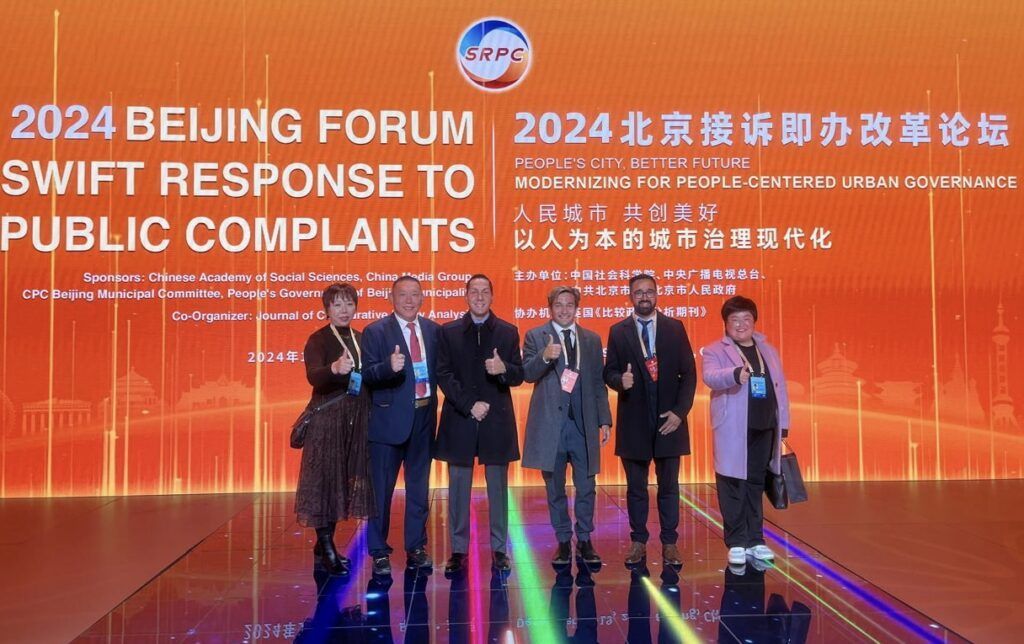
Together with the Mayor of Cruz Alta (Córdoba), Agustin Gonzalez, and the Mayor of Merlo (San Luis), Juan Alvaréz Pinto, we were invited to the Beijing Forum on Swift Response to Public Complaints by the Argentine Dragon Boat Association, chaired by Liu Jingang, who did an impeccable job in organizing and arranging meetings of the highest level.
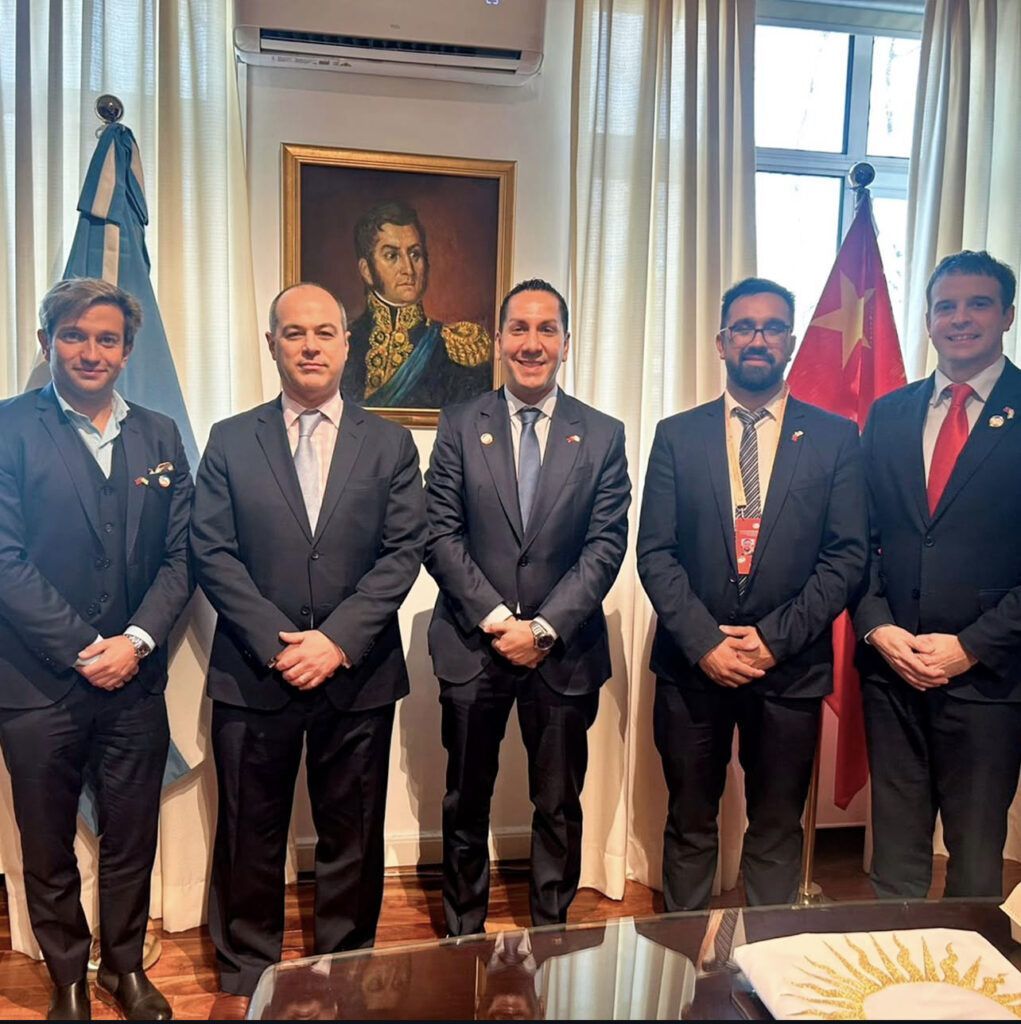
One aspect that I would like to highlight, in turn, is the work of the Argentine Embassy in Beijing, whose collaboration was essential to make the trip a success. Their support in logistics and in the creation of closer ties between both nations was invaluable, but beyond that, the professionalism of the Foreign Service of the Nation is fundamental today for the link with China.
In addition, the relevance of a growing academic relationship, which goes beyond the simple transfer of knowledge and becomes a bridge for the political and commercial strengthening between both countries, was underlined.
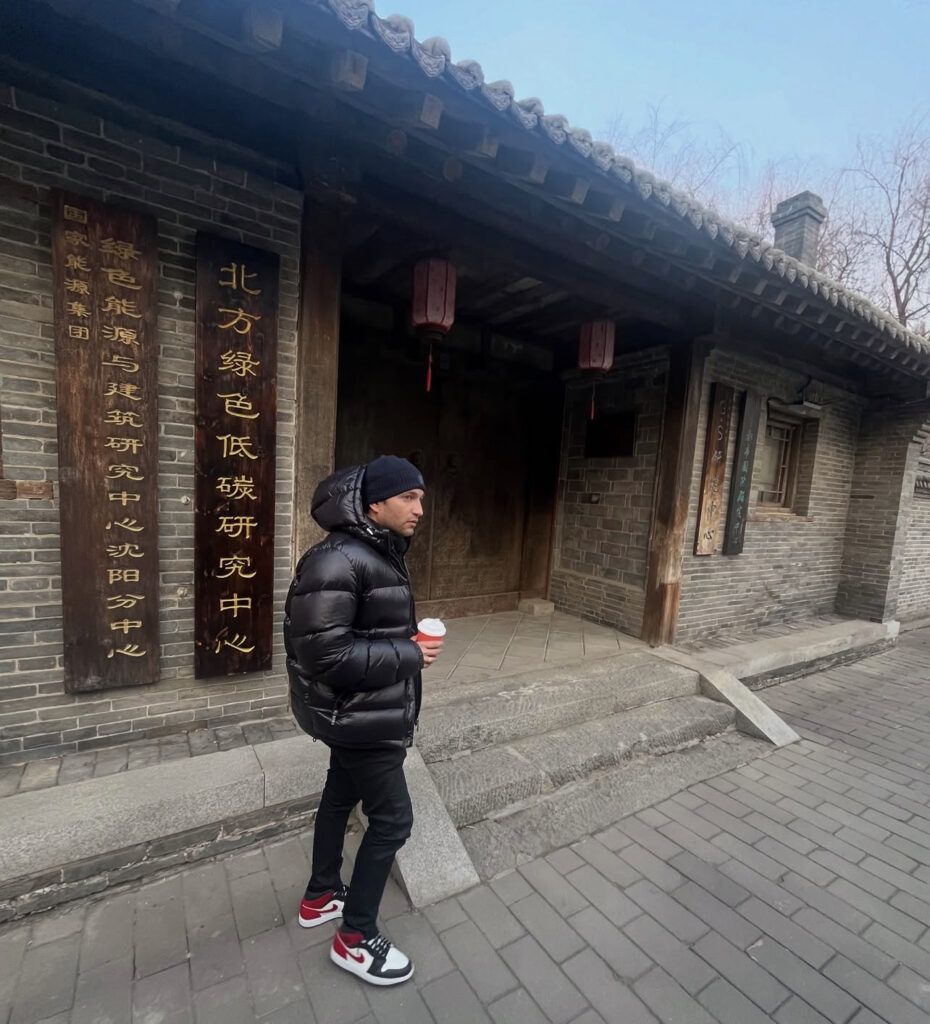
Within Beijing’s urban landscape, the hutongs are one of the most characteristic elements of historic Beijing. These narrow alleys, which intertwine like a labyrinthine network, have been the heart of the city for centuries.
Originally built during the Yuan, Ming and Qing dynasties, hutongs were residential areas that housed city families. Their compact design, with one- or two-story dwellings around small courtyards, reflects the family and community life of yesteryear.
In Beijing, more than anywhere else, it is evident that the future is not a distant concept, but a palpable reality that blends effortlessly with the past.
Walking through the hutongs, especially at night, is like stepping back in time, where you will find small family-run stores, traditional restaurants and markets that still retain their essence. Despite Beijing’s modernization, the hutongs remain a living testimony to the history and local community, a vibrant contrast to the city’s skyscrapers.
At this point, beyond the coquettish Sanlitun neighborhood, home to many embassy staff, university professors and Western businessmen, amidst luxurious Western-style shopping malls, bars and restaurants, in post-covid-19 China, there is still no significant presence of Westerners, lending a greater element of authenticity and an even greater sense of strangeness for those of us who come from so far away.
Chinese customs and idiosyncrasies are practically inscrutable to those of us who come from outside. The best thing to do, besides adding to the enjoyment of the situation, is to let yourself go and immerse yourself without thinking too much about what is going on. Barriers, whether language or cultural, cease to be so important when what prevails is mutual interest and respect for what at first seems foreign.
While Beijing is a clear example of how tradition and modernity can coexist, it also reflects the governance model that China has established, where technological innovation and state control complement each other. In this model, as Mencius said, “the good ruler is the one who seeks the welfare of his people and not his own benefit”. This approach to governance seeks a balance between progress and the welfare of the community.
This relationship seems much more efficient than the Western model, which is plagued by bureaucracy and endless debates. China is distinguished by its ability to act quickly, which is reflected in its infrastructure, its digital economy and its focus on emerging technologies.
A clear example of this is the “12345 Beijing Hot Line”, a citizen hotline that allows residents to make inquiries, file complaints and report problems related to public services and government management. This digitized system not only improves government efficiency, but also contributes to greater transparency and social control, key elements in China’s public welfare monitoring system.
In terms of future opportunities, the relationship between China and Argentina shows significant potential in several key sectors. Trade continues to be fundamental, with Argentine products such as soybeans, meat and wine enjoying strong demand in China.
This clash between old and new is not only reflected in architecture, but also in everyday life.
In turn, Argentina benefits from the import of manufactured goods, technology and industrial products. In addition, the growing demand for lithium, vital for the transition to cleaner energy and the electric car industry, represents a strategic opportunity for Argentina.
Cooperation in academic and scientific areas also plays a crucial role, as China is a leader in areas such as artificial intelligence and renewable energy, which could benefit Argentina in sectors where it has a competitive advantage, such as lithium production and agriculture.

Collaboration between the two countries should be geared towards maximizing efficiency, especially in infrastructure and advanced technology projects.
China, with its ability to act quickly and pragmatically, can be a key partner for Argentina, helping the country to accelerate its own development.
This relationship presents a unique opportunity for Argentina to take advantage of Chinese technological innovations and move forward without the constraints of the Western liberal model, allowing Argentina to strengthen its presence in the global market and build a shared future with China, because, as Confucius said, “when a man has become wise, he has acquired the ability to learn from others”.

Abogado, Mágister, y Doctor en Relaciones Internacionales (CONICET).